
A blog that publishes regularly ends up accumulating dozens, sometimes hundreds of pages. In-depth articles, opinion pieces, practical guides: everything gets mixed up in a chronological flow that buries the oldest publications. Chroniques Blondes, an online media outlet dedicated to lifestyle, beauty, and good deals, is no exception to this reality. Its sitemap offers an alternative entry point to classic navigation, organized not by publication date but by editorial structure.
Sitemap Architecture and Classification Logic on Chroniques Blondes
Most blogs built on WordPress generate an XML sitemap intended for search engines. This technical file lists the URLs to facilitate indexing, not human reading. The HTML version of the sitemap, the one a visitor can actually consult, meets a different need: to map the content in a readable way.
See also : How to Easily Solve Connection Issues with FranceConnect to Access the Visiting Room
On Chroniques Blondes, the sitemap page groups publications by thematic categories. Beauty, fashion, travel, lifestyle: each section gathers its articles under the same block. This organization allows users to identify a specific topic in just a few seconds without knowing the exact title or publication date.
Consulting the Chroniques Blondes sitemap is like browsing the table of contents of a magazine rather than flipping through its pages in disorder. The difference is notable when the volume of articles exceeds a hundred.
Further reading : Argel 7: discover the contraindications to know before using it
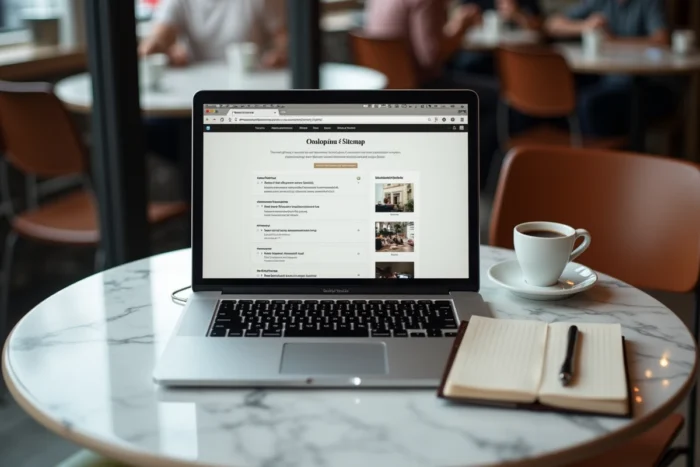
HTML Sitemap and Search Bar: Two Distinct Navigation Paths
The search bar requires a keyword. It works when you know what you’re looking for, at least partially. A term that is too vague returns dozens of unranked results. A term that is too specific may return nothing at all if the writer used a synonym.
The sitemap works in the opposite way. It does not require any prior query. The visitor explores by theme without formulating a search, which suits two types of readers:
- The curious reader who wants to discover the extent of the content available in a section, for example, all the travel articles published on Chroniques Blondes.
- The returning reader who remembers a topic read several weeks ago but cannot recall the exact title or the right keywords.
- The mobile reader, on a small screen, for whom scrolling through an endless chronological flow is less practical compared to a structured summary.
The two tools do not replace each other. Keyword search and sitemap navigation cover different situations, and combining them reduces the risk of leaving the site without finding the desired article.
Accessibility and Keyboard Navigation on a Sitemap
Recent UX trends place accessibility at the center of web design. Keyboard navigation, adjustable contrast, and voice descriptions are gradually being integrated from the design phase. A well-constructed HTML sitemap contributes to this effort.
For a user navigating without a mouse (motor disability, screen reader, keyboard preference), a page listing all the site’s links in a logical order significantly simplifies the journey. Each link is accessible by tabbing, without dropdown menus to hover over or carousels to manipulate.
Concrete Limitations of a Static Sitemap
A classic HTML sitemap remains a static page. It does not adapt to user behavior: the sections appear in the same order, regardless of browsing history. AI-personalized interfaces hint at dynamic sitemaps that can highlight the most consulted categories by a given visitor.
The available data does not allow us to conclude that Chroniques Blondes uses this type of personalization, but the trend is becoming widespread on editorial platforms.
Another point worth noting is the update. An HTML sitemap that does not automatically integrate new publications quickly loses its relevance. On WordPress, plugins generate this page dynamically with each new article published, ensuring a consistently complete mapping.

Website Structure and Internal Linking: What the Sitemap Reveals
Exploring a sitemap also provides insights into a blog’s editorial strategy. The distribution of articles among sections indicates priority topics. On a lifestyle media outlet like Chroniques Blondes, the density of articles by category reflects the editorial line more accurately than a homepage that only shows the latest publications.
The sitemap also reveals the depth of internal linking. An isolated article, without links to other related content, is harder to find through classic navigation. Its presence in the sitemap ensures that it remains accessible even without optimal linking.
What a Regular Reader Can Gain
For those who consult Chroniques Blondes several times a month, the sitemap serves as a dashboard. By comparing the list of articles in a section from one visit to another, one can immediately spot new content published in each theme, without relying on the chronological flow of the homepage or suggestion algorithms.
An HTML sitemap remains one of the few elements of a site fully controlled by the editor and directly useful to the visitor. It does not depend on a sometimes capricious internal search engine or an opaque recommendation algorithm. Its simplicity makes it reliable: a structured list of links, updated, accessible to all user profiles.
The next time a blog’s search bar returns disappointing results, looking for the “sitemap” link in the footer remains the most underestimated reflex in web navigation.