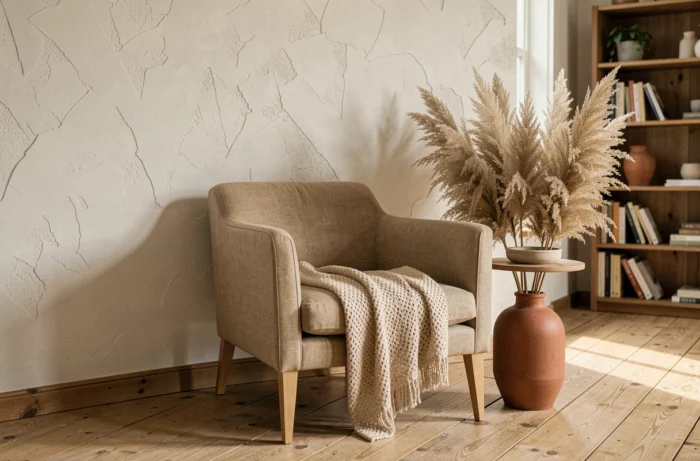
The 2026 decor palettes mark a subtle shift from previous seasons. Earthy tones remain present, natural materials continue to dominate showrooms, but several more recent signals are shaking up established certainties. The shift from brass to chrome in metallic finishes, the arrival of the European regulation ESPR on eco-design for furniture, and the rise of dark woods in living spaces are redefining what “home decor trend” concretely means.
Chrome vs. Brass: The Shift in Metallic Finishes in Interior Decoration
For several years, gilded brass has reigned over lighting fixtures, door handles, and decorative objects. This dominance is eroding. According to a report by Idealista published in August 2026, European designers are noting a return of polished or brushed chrome in contemporary interiors.
This shift is not just a matter of taste. Chrome pairs better with the so-called “honest” materials that the current trend favors: dark woods, textured stones, and patinated metals. Where brass warmed light and Scandinavian interiors, chrome brings a clarity that interacts with darker, denser palettes.
French decor items remain largely focused on terracotta tones and raw wood, and they address this shift towards cooler finishes only minimally. For those wishing to explore home inspirations on News Déco, this gap between mainstream media and ground signals is worth noting.
Replacing brass handles with brushed chrome on a bathroom cabinet or a living room light fixture is enough to update a space without repainting a single wall. The cost remains modest, and the visual effect is immediate.
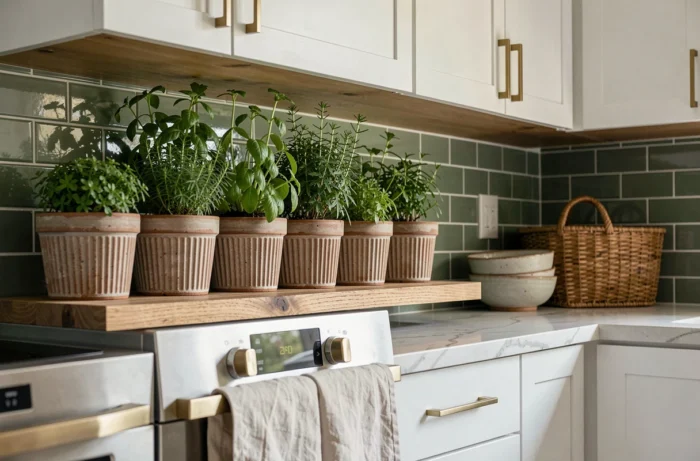
ESPR Regulation and Furniture: What Eco-Design Changes for Decor
Sustainability is prominently featured in discussions about decor in 2026, but it is now a regulatory framework that makes it mandatory. The European regulation ESPR (Ecodesign for Sustainable Products Regulation) mandates eco-design for almost all physical products sold in the European Union, including furniture.
Concrete deadlines are set between 2028 and 2030 depending on product categories. For furniture and decor manufacturers, this means new requirements regarding reparability, recyclability, and material traceability. The regulation also includes the introduction of digital product passports (DPP), which will accompany each piece of furniture with a consultable manufacturing history.
For consumers, the implications are still unclear. Some retailers anticipate a price increase on entry-level furniture, while others believe that standardizing materials could stabilize costs. What is certain is that disposable furniture at very low prices will become harder to market in Europe.
Which Materials to Favor Right Now
Without waiting for the ESPR deadlines, some decor choices are already aligning with the regulatory direction:
- Certified solid wood, easier to repair and recycle than melamine panels, is becoming more relevant for tables, shelves, and living room furniture
- Natural fiber textiles (linen, wool, unblended cotton) are easier to disassemble and recycle than composite synthetic fabrics
- Ceramics and stoneware, inert and durable materials, are becoming essential for flooring and countertops
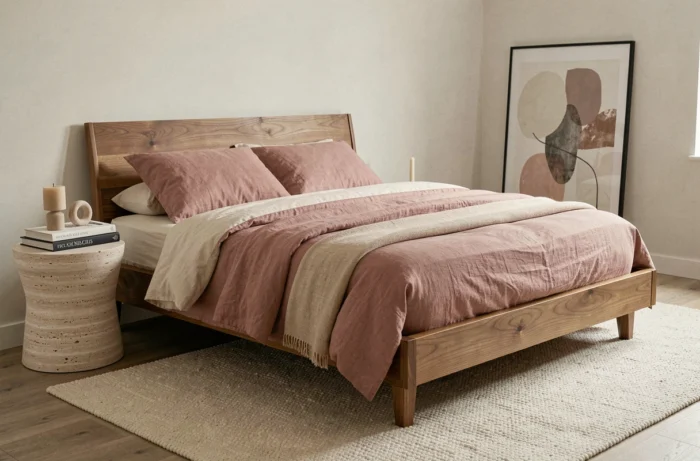
Dark Woods and Deep Colors: The Decor Palette Replacing All-White
The ubiquitous white of Scandinavian-inspired interiors has been receding for several seasons. In 2026, the trend is clearly shifting towards deep shades paired with dark woods: walnut, smoked oak, wenge. These species provide a visual density that light woods (birch, bleached pine) do not produce.
On the wall color front, deep clays, warm browns, and ochres continue their progression. The theatrical red and celadon also appear in the palettes offered by paint manufacturers, but their adoption remains more timid in real interiors than in magazines.
Living Room and Common Areas: Where to Focus Efforts
The living room remains the space where decor trends are most visibly manifested. A walnut coffee table, a chrome-finished light fixture, and earthy-toned linen cushions are enough to anchor a space in the 2026 palette.
For bulky furniture (sofa, bookshelf), the available data does not allow for a conclusion on a single dominant style. Vintage and rounded shapes coexist with more architectural lines. The choice depends more on the room’s configuration than on a universal trend.
Textured Wallpaper and Tactile Surfaces: A Decor Trend Beyond the Visual
Wallpaper is making a notable comeback, but not in its classic printed pattern form. Textured versions, imitating stucco, wall linen, or stone, are gaining ground in spaces like the entryway, bedroom, or office.
This orientation towards tactile surfaces rather than purely visual ones fits into a broader movement. Designers speak of “sensory” decoration: a wall that is as much to be touched as it is to be looked at, an upholstery fabric whose texture matters as much as its color.
- Textured non-woven wallpaper can be applied without wet glue and is easily removable, making it compatible with rentals
- Lime-based coatings, more expensive to apply, offer depth effects that wallpaper does not fully replicate
- Wood paneling with grooves (fluted or slatted style) adds relief without altering the wall’s structure
The question of style arises less in terms of “which trend to follow” than in terms of sensory coherence among the materials in the same room. A textured linen wall paired with a stoneware floor and a walnut piece of furniture creates a continuity that mismatched elements do not produce, regardless of their individual quality.
The decor trends of 2026 converge towards a simple principle: fewer smooth surfaces, more material that is perceptible to the touch. Chrome replaces brass, dark wood supplants bleached wood, textured wallpaper takes the place of uniform matte paint. These micro-shifts, taken in isolation, may seem anecdotal. Combined, they redefine the atmosphere of an interior without requiring heavy renovation.