A round silhouette in the 17th century, an ultra-slim waist in the 1950s, plump lips on Instagram today. The criteria for female beauty change from one era to another, sometimes from one continent to another, with a speed that is surprising once you take a step back.
Why fair skin has not always been a beauty ideal
Have you ever noticed that Renaissance paintings almost exclusively depict women with very pale complexions? This was not an aesthetic coincidence. Fair skin signaled a high social status, that of women who did not work in the sun. In Europe, this norm has persisted for several centuries.
See also : How to Improve Purchasing Performance Through Digitalization and Data
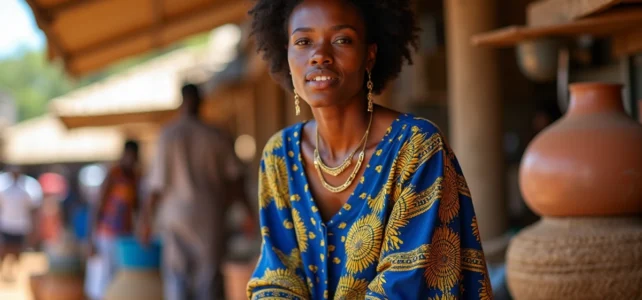
In contrast, in many societies in West Africa or Polynesia, a dark and radiant complexion remains associated with health and vitality. Tanned or golden skin only became desirable in the West in the 20th century, when beach holidays became part of middle-class habits.
This simple example shows that beauty standards do not arise in a vacuum. They reflect social hierarchies, economic conditions, and attitudes toward physical labor. The “ideal” skin color is a social marker long before it is an aesthetic criterion.
You may also like : How to Choose the Right Rectangular Glasses: Essential Tips and Criteria
To better understand the diversity of these standards, one can refer to the beauty criteria for women according to Belle et Unique, which details how these benchmarks vary according to cultures and eras.
Female silhouette and body standards: what each era values
The relationship to the female body is the area where standards shift most visibly. During the Renaissance, painters like Rubens depicted women with wide hips, round bellies, and fleshy arms. Generous shapes conveyed prosperity and fertility.
Three centuries later, the fashion of the 1920s overturned this norm. Flappers wore straight dresses, bound their chests, and displayed an androgynous silhouette. The beauty ideal shifted towards slimness and a certain freedom of movement, linked to women’s emancipation.
The yo-yo of body standards in the 20th century
In just a few decades, the norms have oscillated dramatically:
- The 1950s valued a defined waist, high breasts, and rounded hips, embodied by Hollywood actresses.
- The 1990s imposed the slender silhouette of modeling, with extreme thinness criteria that fueled eating disorders documented by medical research.
- Since the 2010s, social media has propelled a hybrid ideal (slim waist, voluminous buttocks, plump lips) largely shaped by filters and photo retouching.
Each shift corresponds to a broader cultural change. The “ideal” body is a mirror of the dominant values of a society, not a biological constant.
Cosmetic surgery and social media: the new drivers of beauty standards
Standards no longer circulate solely through painting, cinema, or magazines. Today, a TikTok filter can popularize a facial feature in just a few weeks. This mechanism has concrete consequences on the use of cosmetic surgery.
According to the president of the French Society of Aesthetic Plastic Surgeons (SoFCEP), the number of procedures performed in France has doubled between 2010 and 2023. Injections, rhinoplasties, chin reshaping: these interventions are no longer reserved for an elite. They have become a common practice to get closer to standards widely disseminated online.
The paradox is striking. On one hand, the body positive movement encourages self-acceptance and body diversity. On the other hand, the consumption of beauty and fitness content on social media has never been more intense. Supporting body diversity and consuming slimming filters coexist among the same users.

Female beauty criteria according to cultures: beyond the Western model
Reducing beauty to a single global model would be a mistake. Several regions maintain standards that are very different from those disseminated by Western media.
In Mauritania, voluntary weight gain (gavage) has long been practiced to prepare young women for marriage. A thin body was perceived as a sign of poverty. In Myanmar, Kayan women wear neck rings from childhood to elongate the neck, considered a grace attribute.
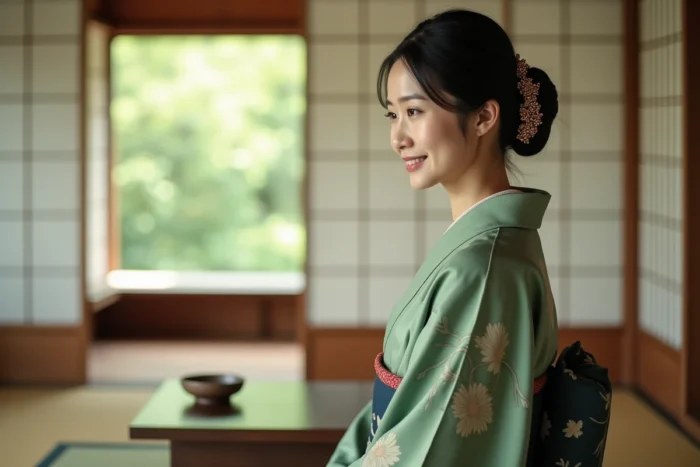
In Japan, the kawaii aesthetic values childlike features: large eyes, round face, very fair complexion. This model coexists with the growing influence of Korean K-beauty, which emphasizes “glass skin,” smooth and almost transparent.
These examples show that each culture constructs its beauty criteria based on its history and social codes. Global homogenization through social media is real, but it does not erase these particularities.
Towards a redefinition of female beauty norms
For about a decade, cosmetic brands have expanded their shade ranges, runways have welcomed models of varied body types, and contests like Miss France face legal challenges regarding their selection criteria.
These developments do not signify the end of standards. They indicate a shift: female beauty is now negotiated between algorithmic pressure and individual assertion. The criteria have not disappeared; they have multiplied and fragmented.
The common thread, from one era to another, remains the same. Aesthetic norms speak less about women’s bodies than about the society that produces them. Understanding this mechanism is already a step towards liberation.