
Obtaining a property tax exemption or escaping the vacant housing tax requires proving that the property cannot be occupied. Declaring a property uninhabitable to the tax authorities is not based on a simple assertion by the owner: the tax administration requires tangible evidence, the nature and probative value of which vary depending on the situation. Which documents truly weigh in the processing of a file, and which are likely to be dismissed?
Administrative Order and Unsanitary Report: The Hierarchy of Tax Evidence
Not all evidence is equal in the eyes of the DGFiP. An unsanitary prefectural order or a prohibition to inhabit issued by the ARS is the most difficult piece of evidence for the administration to contest, as it comes from a public authority after a contradictory inspection.
See also : Choosing the Right Seat at the Accor Arena: A Guide to Fully Enjoying a Concert
| Type of Evidence | Issuer | Probative Value | Limitations |
|---|---|---|---|
| Unsanitary or prohibition to inhabit order | Prefect, ARS, mayor | Very strong (enforceable administrative act) | Long procedure to obtain |
| Technical diagnostic report (structure, asbestos, lead) | Certified diagnostician | Strong | Must indicate an impossibility of occupation, not just a simple defect |
| Estimates or invoices for heavy work | Construction companies | Medium | Insufficient alone, must accompany a diagnosis |
| Datable photos and sworn statement | Owner | Weak | Considered declarative, rarely sufficient on its own |
An owner who has an unsanitary or definitive prohibition to inhabit order holds the strongest proof. This document, issued after an inspection report, officially establishes that the property cannot be occupied under normal living conditions.
To complete this file, it is useful to consult the detailed elements related to an uninhabitable house on Immo Radar, which lists the accepted documents according to specific situations.
Read also : What is the average price of a hotel night in France in 2024?
Technical Diagnostics and Rehabilitation Estimates: What the Administration Really Accepts
In the absence of an administrative order, the owner must compile a body of converging evidence. The DGFiP accepts work reports, diagnostics, and demolition or rehabilitation projects that establish that the property cannot be occupied normally.
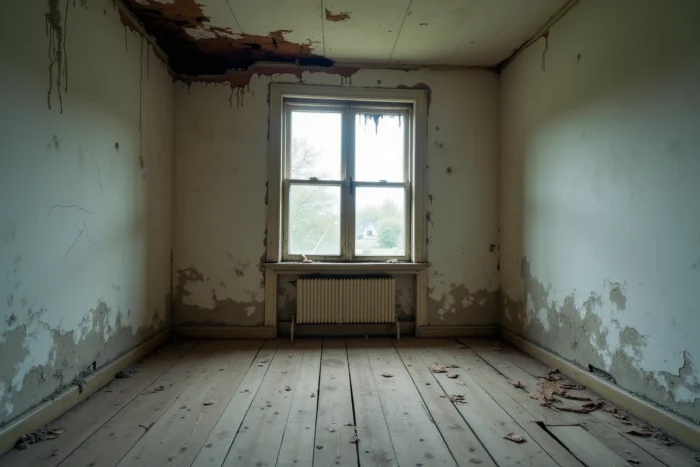
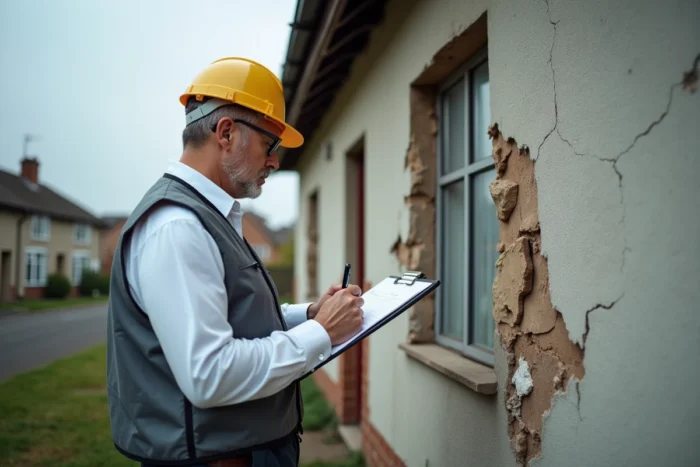
A structural diagnosis conducted by a study office or an accredited expert carries more weight than a simple photographic observation. The document must precisely describe the disorders (partial roof collapse, lack of drinking water supply, lead contamination beyond regulatory thresholds) and explicitly conclude on the impossibility of inhabiting the premises.
Documents that Strengthen the File
- An asbestos or lead diagnosis indicating a danger to the health of occupants, accompanied by an obligation to carry out work before any reoccupation.
- Detailed estimates from construction companies for restoration work, accompanied by a projected timeline showing that the duration of the work covers the relevant fiscal period.
- A demolition permit or a heavy rehabilitation authorization issued by the town hall, proving that a concrete project prevents the occupation of the property.
Estimates alone, without a technical diagnosis, are rarely sufficient. The administration may consider that the owner is deliberately delaying the work to maintain vacancy. The technical diagnosis transforms a simple delay into an objective impossibility.
Declaration on impots.gouv.fr: Path and Reason for Vacancy to Select
Declaring an unoccupied property goes through the “Real Estate” service on the personal space of the impots.gouv.fr site. The process requires specifying the reason for the vacancy among several options: rental vacancy, personal reasons (sale, inheritance), upcoming demolition or renovation, or uninhabitable premises (unsanitary housing).
Selecting the reason “uninhabitable premises” triggers a specific instruction. The owner must provide the date of the start of the vacancy. This date conditions the calculation of the potential property tax exemption, which applies proportionally to the duration of vacancy within the year.
Two Particular Situations Managed by the Same Process
The online form also allows reporting the departure of an occupant to a nursing home or the presence of squatters (premises occupied without rights). These cases fall under the same interface but do not require the same justifications as unsanitary housing.
For an uninhabitable property, attaching supporting documents as soon as the online declaration is made speeds up processing. The administration may request additional information, but a complete file from the outset reduces the risk of rejection.
Tax on Vacant Housing: Proving that the Vacancy is Involuntary
The tax on vacant housing (TLV) targets properties unoccupied for more than a year in certain tense areas. The DGFiP excludes from this tax properties for which the vacancy is independent of the taxpayer’s will, particularly those affected by causes that hinder sustainable occupation under normal conditions.
The burden of proof lies with the owner. The same documents serve for the TLV and for the property tax exemption, but the stakes differ: for the property tax, it is about obtaining an exemption proportional to the duration of vacancy. For the TLV, it is about a total exemption.
Acceptable Evidence for the TLV
- Unsanitary, prohibition to inhabit, or peril orders issued by the prefect or mayor.
- Technical diagnostic reports concluding on the impossibility of occupation.
- Documented demolition or rehabilitation projects with urban planning authorizations.
- Rental management mandates or agency attestations proving unsuccessful attempts to rent (for rental vacancy, distinct from uninhabitability).
An owner who combines an unfavorable structural diagnosis and a rehabilitation project authorized by the town hall presents a coherent file. In contrast, a property that is simply dilapidated but connected to utilities and structurally sound will struggle to be qualified as uninhabitable.
The distinction between a degraded property and an uninhabitable property remains the main point of friction with the administration. A leaking roof does not automatically render a property uninhabitable. What matters is the convergence between the technical observation and the material impossibility of living there, documented by professionals independent of the owner.