
When booking for a concert at the Accor Arena, the natural instinct is to aim for the category closest to the stage. The problem is that the stage is not always in the same place. One artist sets up a classic frontal setup, the next deploys a catwalk that crosses the pit, and another opts for a central 360-degree stage. The seating plan displayed on the ticketing site tells only part of the story.
Frontal stage, catwalk or 360: what really changes for the spectator
At the Accor Arena, the concert configuration radically alters the value of a seat. A lateral seating category in the stands can end up facing an advanced catwalk and offer an unobstructed view of the artist for half the show. Conversely, a central seat in the upper tier loses all its advantage when the stage is set up in 360 degrees, because the artist turns and only faces each section intermittently.
Related reading : What evidence to provide to declare a house uninhabitable to the tax authorities?
Before buying, it’s wise to look for the type of staging planned for the tour. Official announcements from artists often mention the format (“runway”, “in the round”, “frontal”). When this information circulates, it is worth more than any color code on a generic seating plan. An article detailing the concert configurations at the Accor Arena helps refine this identification based on the announced stage setup.
The best seat depends on the show, not the price category. This is the starting point for any reasoned choice.
Further reading : How to Choose the Right Rectangular Glasses: Essential Tips and Criteria
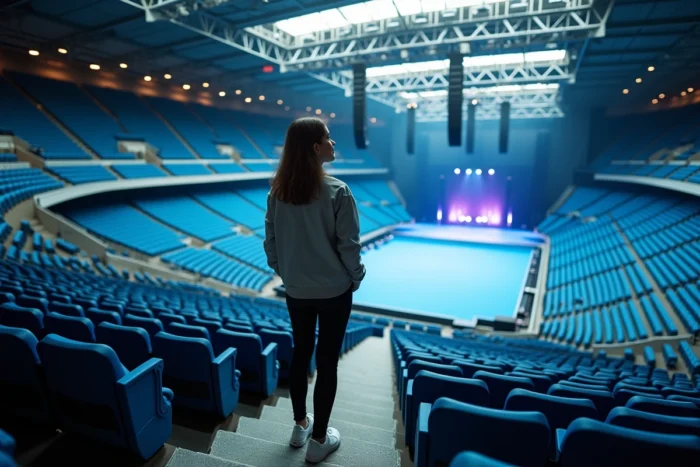
Lower stands or pit at the Accor Arena: decide based on the type of concert
The pit offers proximity to the artist, but it imposes real physical constraints. You stand for several hours, visibility depends on the height of the people in front of you, and navigating to the restrooms or bars is like an obstacle course. For an energetic concert where the collective atmosphere matters as much as the view, the pit is fully justified.
The lower stands offer a different compromise. You are seated, the view of the stage is often elevated without being distant, and you enjoy the visual effects (screens, light shows, pyrotechnics) better. For an artist whose show relies on elaborate visual production, the lower stands facing the stage remain the best comfort/show ratio.
Upper stands: not always a bad option
It is often said that seats in the upper tier should be avoided. Opinions vary on this point. At the Accor Arena, the venue is compact enough that the last rows of the upper stands maintain a decent visual contact with the stage, especially when giant screens complement the setup.
The real trap of the upper stands is not the distance, but the angle. An off-center seat in the upper tier can provide a skewed view of the stage that strains the neck over two hours of concert. Favoring central blocks in the upper tier mitigates this issue.
Access and circulation in the venue: an underestimated comfort criterion
A good seat loses some of its appeal if access to the venue turns the evening into a logistical challenge. At the Accor Arena, the entrance doors correspond to specific sectors. Arriving at the wrong door forces you to navigate around the venue, sometimes for several hundred meters, with a queue to boot.
- Identify in advance the access door indicated on the ticket and check the route from Bercy station (metro lines 6 and 14)
- Arrive at least 45 minutes before the doors open for high-attendance concerts, especially in the pit where general admission rewards early arrivals
- Plan for the exit: blocks close to the side exits allow for quicker departures, a concrete advantage when you need to catch a last metro
The venue can accommodate about 20,300 spectators in standing concert configuration. At this capacity, the flow of circulation weighs as much as the quality of the seat.

Tickets and categories at the Accor Arena: look beyond the price
The price categories (often numbered from 1 to 5 or more) do not correspond to a linear ranking of quality. A lateral category 2 may offer a worse experience than a central category 3, depending on the position of the stage and the catwalk.
Some useful pointers before finalizing a purchase:
- Compare the specific seating plan for the event (not the generic plan) with photos from past concerts in the same stage format
- Check if any seats with restricted visibility are indicated; they exist near certain technical pillars or under overhangs of the stands
- For concerts with a catwalk or advanced stage, the blocks located along the artist’s path become prime locations, often in cheaper intermediate categories
The case of standing seats in the stands
Some events offer “standing in the stands” tickets, a hybrid option where you access the stands without an assigned seat. The advantage is the price, which is more accessible. The downside is the lack of guarantee on the exact location. You may end up in a blind spot if you arrive late.
Choosing a seat at the Accor Arena is not just about a category number on a static plan. Each tour reconfigures the venue, and two minutes spent checking the stage format before purchase can significantly change the quality of the evening.