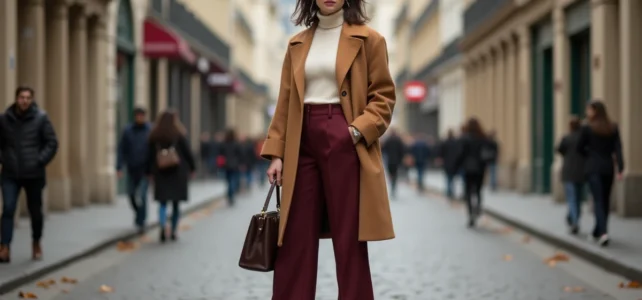
Each season brings its share of pieces presented as essential, but the fashion trends of 2026 stand out due to a shift in logic. The novelty no longer lies solely in cuts or colors: it plays out in the way of combining, reusing, and personalizing what already exists in a wardrobe. Measuring what has truly changed compared to previous seasons allows for sorting the marketing noise from the stylistic signal.
Fashion trends 2026 compared to previous seasons
The spring-summer 2026 collections share certain codes with those of 2024 and 2025, but the differences reveal a precise trajectory. The table below summarizes the dominant axes observed over the last three seasons.
Related reading : Essential Steps to Obtain a Motorcycle Transfer Certificate When Selling
| Stylistic Axis | 2024 | 2025 | 2026 |
|---|---|---|---|
| Silhouettes | Oversized blazers, bermuda shorts, wide trousers | Chic moto look, neo-crinoline, low waist | Soft tailoring, hybrid layering, sculpted cuts |
| Dominant Colors | Emerald green, sunny yellow, cobalt blue | Retro tones, intentional wrinkling | Butter yellow, desaturated palettes, technical contrasts |
| Materials | Linen, lightweight cotton, silk | Reimagined denim, moto leather | Flatlock finishes, technical fabrics, structured textures |
| Key Accessories | Soft bags, gold jewelry | Retro pumps, slogan tees | Structured bags, sport-couture details |
| Buying Philosophy | Seasonal renewal | Nostalgia and cultural references | Personalization, anti-consumerism |
The most noticeable shift between 2025 and 2026 concerns the last line of the table. Previous collections offered pieces to adopt as they were. This season, the value shifts towards the ability to adapt an existing piece to multiple contexts.
References to surfing at Louis Vuitton men’s or the blokecore aesthetic confirm that sportswear is not retreating but mutating into hybrid forms that incorporate tailoring codes. This soft tailoring mixed with sporty influences produces silhouettes that are difficult to classify into a single category, forcing a rethink of outfit composition.
Read also : Essential Trends and Tips to Embrace Fashion This Season
Personalization and unique style: what really changes this season
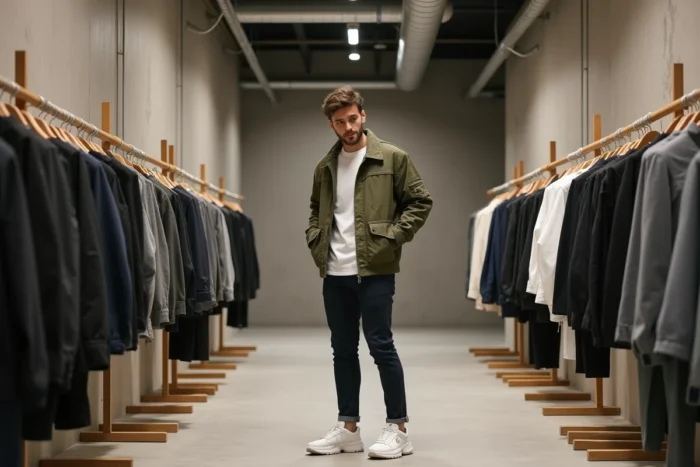
Among the fashion trends of this season, personalization stands out as a structuring axis of ready-to-wear. The phenomenon goes beyond the simple customization of a garment: it is about a positioning of brands that offer pieces designed to be combined in multiple ways.
An open soft-tailoring blazer worn over a technical t-shirt, a draped dress paired with structured sneakers, wide trousers layered over a surf short: these combinations reflect a style that is no longer dictated by a single look but by personal combinations. The analyzed feedback on crunshyscan on Actu Web confirms that searches related to piece combinations are progressing more than those concerning an isolated piece.
The structured bags illustrate this logic well. Their rigid geometric shape fits both a streetwear outfit and a more dressed ensemble. In contrast, a soft bag trendy in 2024 imposed a narrower casual register.
- Hybrid layering allows for recycling mid-season pieces by layering them with technical elements (thin windbreakers, lightweight quilted vests)
- Flatlock details, borrowed from sportswear, appear on city pieces like pleated trousers or short jackets
- The desaturated palette (butter yellow, beige, pearl gray) facilitates associations between pieces from different seasons without chromatic disruption
This shift towards combination rather than accumulation redefines what it means to adopt a trend. Owning the piece matters less than knowing how to integrate it into an existing wardrobe.
Adopting trends without overconsumption: the real fashion challenge of 2026
The anti-fast fashion debate is not new, but the 2026 season transforms it into a fully-fledged style criterion. The market for upcycled and second-hand fashion is gaining ground, and events like the Slow Fashion Week in Marseille testify to a growing structuring of this approach.
The question is no longer whether buying less is desirable. It concerns the method: how to renew a look without renewing an entire wardrobe. Three concrete levers emerge this season.
The first is the choice of pieces with high versatility. A thick cotton beige trouser, worn with sneakers in April and then with structured loafers in September, covers two registers for a single purchase. The barrel jean, very present in the spring-summer 2026 collections, works on the same principle: its loose cut adapts to fitted tops as well as oversized sweaters.
The second lever concerns accessories. A structured bag or a pair of pumps (which returned to the runways after several seasons of absence) radically changes the reading of an outfit without touching the rest. A technical or sculptural accessory transforms a neutral base into a bold look.
The third lever, perhaps the least intuitive, is color. The 2026 palettes, dominated by soft tones and measured contrasts, are designed to coexist. Unlike the saturated colors of 2024, butter yellow or beige layer without creating dissonance with pieces already present in a wardrobe.
Key pieces for spring-summer 2026 and their rotation potential
Not all trendy pieces are equal in terms of stylistic longevity. Some wear out in a season, while others last for several years because their cut or material remains compatible with subsequent evolutions.
- The oversized lightweight knit sweater works from spring to autumn and integrates into layering without excessive bulk
- The colorful short jacket, a signature of spring 2026, provides a focal point for a monochrome outfit and replaces a classic bomber
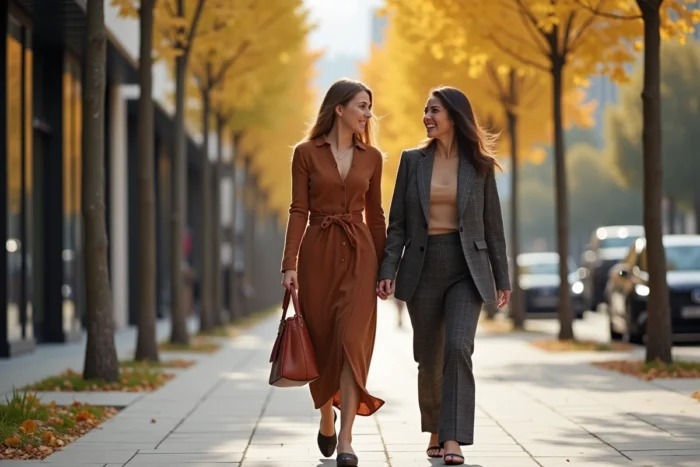
- The draped dress, in a fluid material, transitions from a casual context to a dressed event depending on the chosen shoes and bag
- The technical cut t-shirt (flatlock seams, structured collar) replaces the basic jersey while adding a sport-couture dimension
The common denominator of these pieces: none works alone. Their value depends on the quality of the associations built around them. This shift, from star garment to wardrobe system, constitutes the true stylistic marker of the season.
The fashion trends of 2026 reward less impulsive buying than reflection on what already exists. Unique style no longer arises from a rare piece but from a combination that no one else has assembled in the same way.