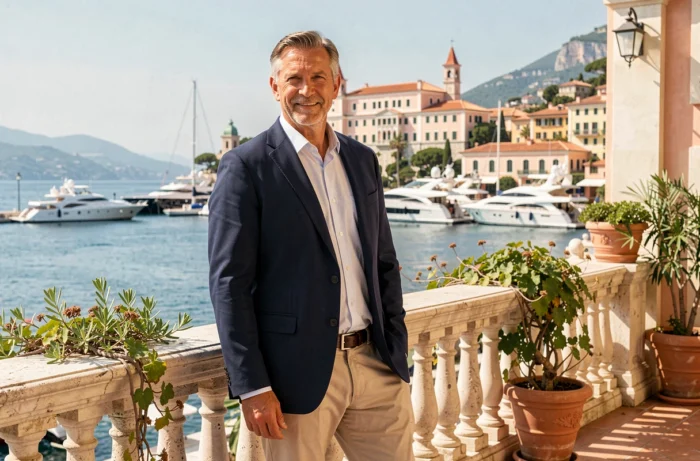
Monaco concentrates a rare cultural fabric within less than two square kilometers in Europe. Life in Monaco is not just about the Casino or the Grand Prix: behind the international showcase, religious traditions, an endangered language, and a rapidly evolving heritage policy shape the daily life of the Principality. Understanding what is really happening there requires going beyond the usual shortcuts.
Monégasque Heritage at Risk: What the European Heritage Days 2026 Reveal
The European Heritage Days 2026 adopted the theme “Heritages at Risk” in Monaco. This choice is not trivial. It connects built heritage, natural environment, climate change, urbanization, and the transmission of know-how within the same framework of reflection.
The exhibition Memory of Places, presented until January 24, 2027, documents monumental works and artistic elements of the Monégasque urban landscape, whether they are preserved, disappeared, or awaiting reinstallation. The memory of lost works becomes a cultural subject in its own right in the Principality, marking a turning point from a policy long focused on the conservation of historical monuments.
The urban pressure on the Rock and surrounding neighborhoods raises a concrete question: how to preserve material traces when every square meter is subject to trade-offs between construction and conservation? Field reports diverge on this point, with some cultural actors believing that densification erases old visual landmarks, while others emphasize that digital documentation partially compensates for these losses.
To keep up with local news and the traditions of the Principality throughout the year, a useful resource is: https://www.petitmonegasque.fr/, which covers Monégasque life from a practical and cultural perspective.
Monégasque Language: A Ligurian Dialect Facing Extinction
Monégasque (u munegascu) is a Ligurian dialect historically spoken on the Rock. Its number of native speakers remains very low, concentrated in long-established Monégasque families. French dominates administrative, commercial, and daily life.
The Principality has made the preservation of this language one of its cultural priorities. The teaching of Monégasque is included in the local school curriculum, and occasional initiatives (performances, publications, bilingual signage) attempt to maintain minimal visibility. The available data do not allow for conclusions about the actual long-term effectiveness of these measures.
What distinguishes the Monégasque situation from other threatened regional languages in Europe is the small size of the territory and the high proportion of foreign residents. Monégasques represent a demographic minority in their own State, complicating any language revitalization policy based on daily use.
Traditional Festivals in Monaco: Religious Calendar and Civic Identity
The Monégasque calendar remains strongly structured by religious festivals inherited from a Mediterranean and Catholic tradition.
- Saint Devote’s Day, celebrated on January 26 and 27, honors the patron saint of the Principality. The tradition includes the blessing of a boat followed by its burning in the harbor, a ritual that dates back several centuries and engages the local population each year.
- The National Day, on November 19, combines a religious ceremony at the cathedral, a military parade by the Prince’s Carabiniers, and popular festivities. It serves as the main marker of civic identity in the calendar.
- The Good Friday procession and the Feast of Saint John complete a religious cycle that rhythms life on the Rock well beyond the circle of practitioners.
These celebrations play a role in cohesion in a State where the diversity of resident nationalities could dilute the sense of belonging. Monégasque religious traditions serve as both identity cement and a manifestation of faith.
Cultural Policy in Monaco: Going Beyond the Image of Institutional Prestige
The recent cultural policy of the Principality seeks to go beyond the image of a culture reserved for prestige and historical institutions. The Festival Les Visiteurs du soir, organized around the Heritage Days, highlights contemporary art in venues typically closed to the public, demonstrating a desire for openness.
Access to heritage now relies on targeted mobility and free access measures. For example, the Monaco Bus Company offered free shuttles during the European Heritage Days 2026, facilitating movement between open sites. This type of measure, seemingly modest, reflects an awareness: making culture accessible in such a dense State requires logistics designed for pedestrians and public transport.
However, the question of long-term funding for this openness remains unresolved. Monaco does not have a Ministry of Culture in the classical sense, and cultural governance relies on several entities (Department of Cultural Affairs, Heritage Institute, private foundations). Coordination among these actors will determine the Principality’s ability to renew its cultural offerings without losing heritage coherence.
Financial Crime and Monaco’s Image: An Issue Affecting Local Life
Life in Monaco is not limited to traditions and culture. In 2025, the Monégasque Financial Security Authority expanded its controls beyond banks, incorporating real estate, luxury, yachting, and business services into its oversight scope. Over 87 million euros in suspicious operations have been frozen, and the number of suspicious activity reports has reached a record level.
This intensification has concrete repercussions on the daily lives of residents and professionals. Compliance procedures have become more burdensome for real estate transactions, opening bank accounts, and certain commercial activities. For a State whose attractiveness partly relies on administrative fluidity, balancing financial transparency and quality of life presents a delicate trade-off.
The Principality of Monaco remains a unique case in Europe: a sovereign State the size of a neighborhood, where every regulatory decision directly affects the social fabric. Recent developments in financial control are reshaping residency conditions just as the grand traditional festivals shape collective identity. Following Monégasque life means observing these two dynamics in parallel.