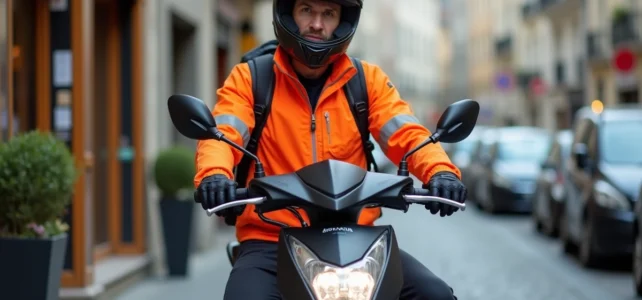
You have had your car license for a few years now and the desire to ride a scooter or a light motorcycle is growing. The good news is that the B license opens the door to 125 cc two-wheelers, provided you meet certain specific criteria. Here’s what you need to know before taking action, from eligibility conditions to the certificate that will allow you to ride legally.
B License and A1 Category: an equivalence, not automatic access
The shortcut is common: “I have a B license, I can ride a 125.” The reality is more nuanced. The B license does not directly grant access to riding a light motorcycle. It allows you to obtain the equivalence of the A1 category of the driving license, after additional training.
Recommended read : How to Leave a Dog Alone After Surgery and Manage the Elizabethan Collar Effectively
This A1 category allows the riding of motorcycles with an engine capacity not exceeding 125 cc and a power output below 11 kilowatts.
If you aim for a more powerful two-wheeler, you will need to go through the A2 license, and then the transition to the A license. These are different processes.
Read also : How to Improve Purchasing Performance Through Digitalization and Data
To ride a 125 cc with a B license, a prerequisite applies: you must have held the B license for at least two years. Below this threshold, registration for the training will be refused.
125 cc Training of 7 Hours: Content and Concrete Progression
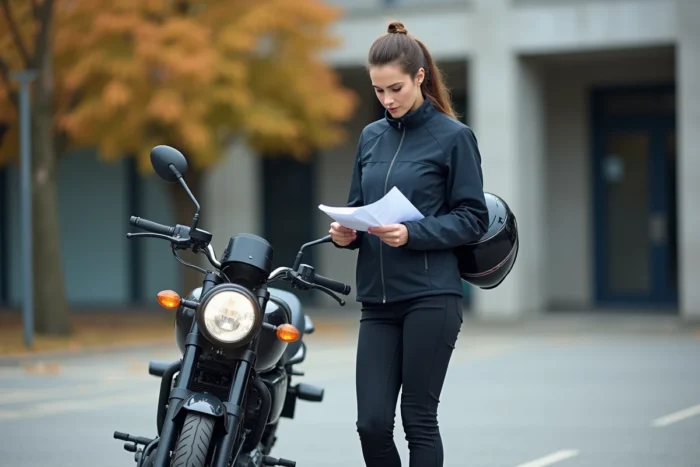
You may have heard about a “one-day course.” It’s about that, but the program is structured into three distinct blocks, provided by an accredited driving school.
- 2 hours of theory: analysis of risks specific to two-wheelers, behavior in traffic, blind spots of other vehicles. The instructor also discusses regulations related to mandatory equipment.
- 2 hours of practice off-road: exercises on a closed course to learn how to handle the two-wheeler at low speed, braking techniques, and balance. This is when you concretely discover the reflexes to acquire.
- 3 hours of practice on the road: riding on open roads, in real conditions, with an instructor communicating via intercom. Merging onto roundabouts, overtaking, positioning on the roadway: it covers everything.
The training can take place in a single day or be split over several sessions, depending on the organization of the driving school. No final exam is scheduled at the end of the training. The instructor provides a certificate of completion, which serves as legal proof to ride a 125 cc.
125 Training Certificate: the Document to Keep on You
Unlike the standard motorcycle license, the 7-hour training does not lead to a graded test. You leave with a certificate issued by the driving school. This document proves that you have completed the entire program.
In the event of a roadside check, it is this certificate that law enforcement will request, in addition to your B license. Keep it in your vehicle or in a digital version on your phone. Losing it does not require you to retake the training, but obtaining a duplicate from the driving school may take time.
A point often misunderstood: this certificate does not have an expiration date. Once obtained, it remains valid indefinitely. You can stop riding a 125 for several years and resume without having to retake training.
Special Case: B License Obtained Before March 1, 1980
If your B license dates from before March 1, 1980, the situation is different. The 7-hour training does not apply to you. The old B license automatically included the equivalence for riding light motorcycles, without additional training.
You can therefore ride a 125 cc without any additional certificate. Your B license alone is sufficient in case of a check. This provision remains in effect regardless of when you decide to start riding two-wheelers.
Accessibility of Training for Drivers with Disabilities
Are you wondering if a physical disability prevents access to this training? The decree of March 28, 2022, regarding the conditions for issuing a driving license, provides for a personalized assessment of driving ability. The principle adopted is one of compensation rather than exclusion.
In practice, an accredited doctor evaluates the candidate’s ability and may recommend the use of an adapted vehicle. Not all driving schools are equipped for this support, but they are required to direct the candidate to an appropriate structure.
Choosing Your Driving School for 125 cc Training
Not all driving schools offer the 7-hour training. Only those with specific approval for two-wheeler instruction can provide it. Before enrolling, check three concrete points.
- The school’s prefectural approval for category A1, displayed on the premises or available from the prefecture.
- The availability of a practice area off-road, essential for the first two hours of handling.
- The type of vehicle provided during training: some schools only offer automatic scooters, while others also provide manual transmission motorcycles. If you plan to ride a motorcycle rather than a scooter, ask to train on the type of vehicle you will use afterward.
Prices vary by school and region. Comparing several quotes remains the best approach, ensuring that the price includes the certificate and all training hours.
A final detail often overlooked by future 125 cc riders: the training certificate allows you to ride, but it does not exempt you from obtaining specific insurance for your two-wheeler. The car insurance does not cover the motorcycle, even if it’s the same license holder. Keep this in mind before your first ride.